Democracy's Double Helix. Participation, Equality and Revolution in Early Modern Europe
Where does our modern democracy come from? In a Europe-wide historical perspective, Democracy’s Double Helix. Participation, Equality and Revolution in Early Modern Europe explores the roots of modern democracy in a new way.
During his book presentation, Lars Behrisch will argue that medieval traditions of participation by birth elites, on the one hand, and a slowly emerging notion of individual equality, on the other, came together only in the American and French revolutions – with modern democracy as the largely unplanned result. He looks at the political practices and attitudes prevailing before its emergence. From this perspective, it becomes clear that there was little to predict the coming of democracy. In his book Behrisch describes further that these two roots were, and have remained, in tension – making democracy an inherently contradictory and necessarily fragile project.
Practical
Date 13 January 2026
Time 16:00
Place IISG, Cruquiusweg 31, Amsterdam
Entrance Free admission, but please send an email to event@iisg.nl if you want to join.
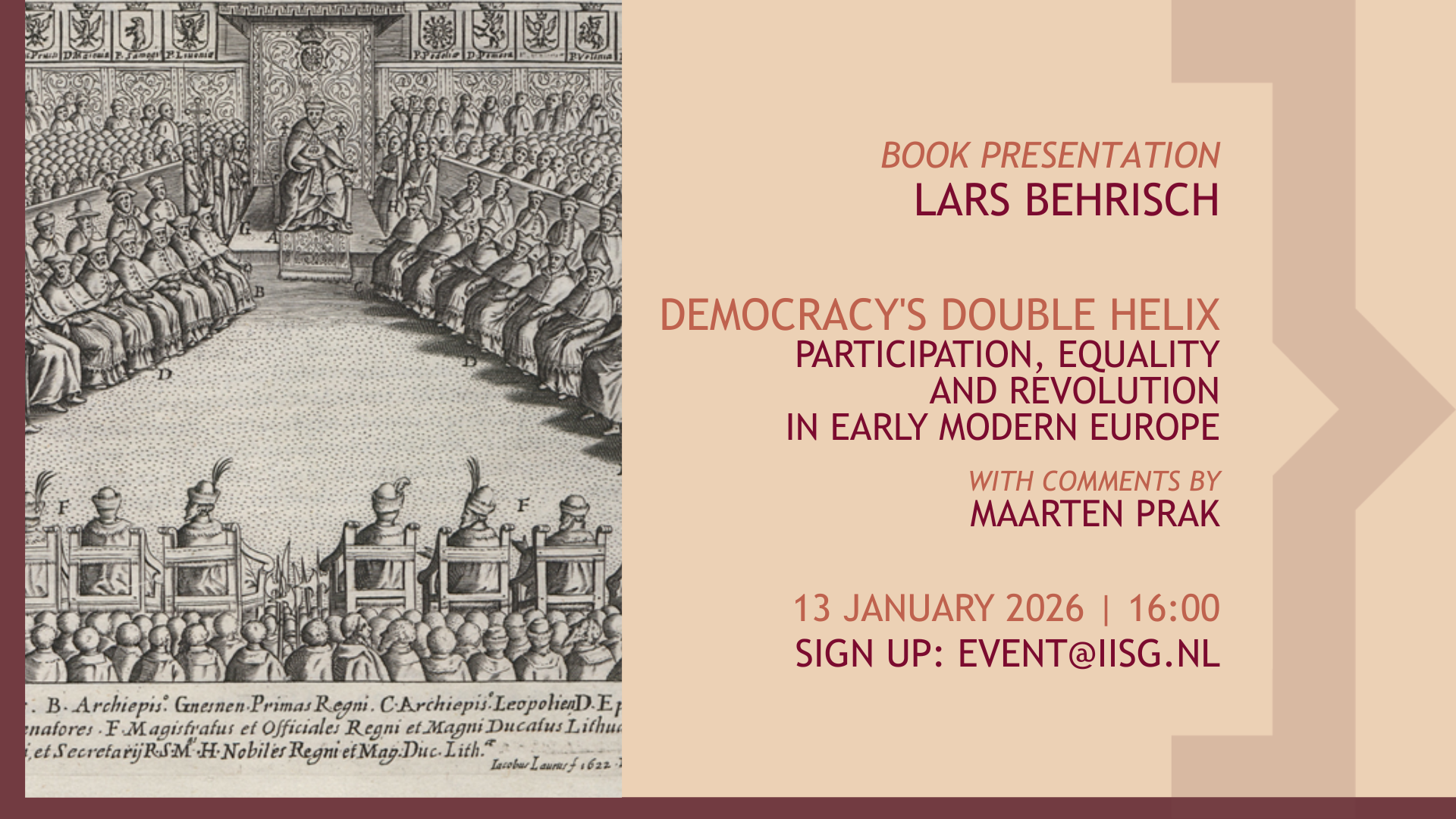
Image: the Polish-Lithuanian Sejm, or parliament, in the early 17th century.
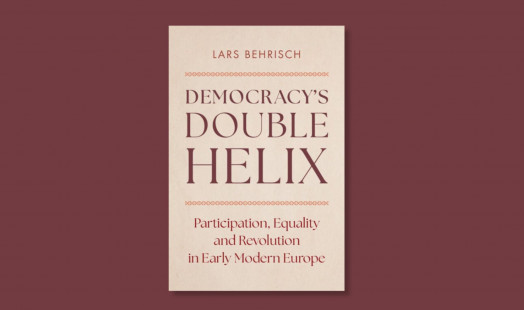
Lars Behrisch is an associate professor at Utrecht University. He specialises in early modern comparative European history - from France, Britain and Germany all the way to Russia. His interests focus on early modern politics and political culture but include the history of religion, urban history, the history of crime and the history of identities. His current research is geared towards a long-term comparative study of the genesis of democracy in Europe and America from the Middle Ages through the early modern period and the late-18th century ‘Age of Revolutions’. The results has now appeared in Democracy’s Double Helix. Participation, Equality and Revolution in Early Modern Europe (Cambridge University Press, 2025).