Labour conflict when markets integrate: global price shocks and strike activity in Italy, 1881–1911
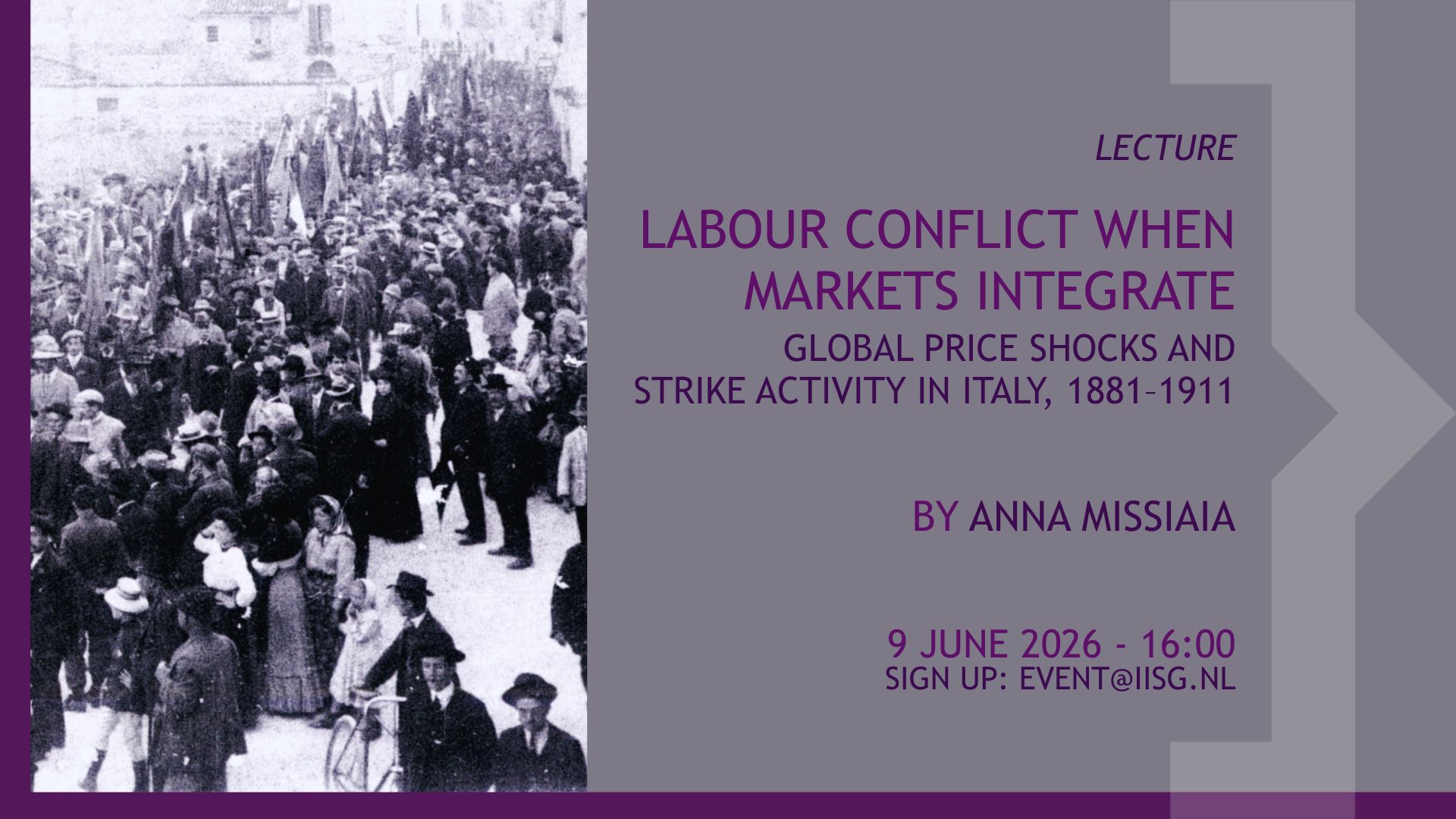
The turn of the nineteenth century marked the rise of labour conflict in the industrializing western world, as well as a general expansion of global trade and integration. In her talk, Anna Missiaia quantitatively tests the link between global price shocks and labour conflict during this period.
To do so, she relies on provincial-level data on strike activity in Italy (1881-1911) and a measure of price shocks specific for each province based on import prices and provincial occupational shares. She finds that negative shocks to the international price of silk cocoons, which represented a sizable home production for many households, consistently increased offensive strike activity. Meaning strikes aiming at better salary or working conditions in agriculture and low-mechanized sectors. As domestic prices followed the global ones, workers attempted to compensate for the loss of household income from cocoon production through strikes in other sectors where household members were employed. Consistent with this, she does not find an increase in offensive strikes in the more mechanized sectors, where the workers were more specialized and less likely to engage in cocoon production. She also find that negative price shocks for sulfur triggered defensive strikes in mining against the worsening of working conditions following Italy's loss of its global market share.
Practical information
Date: 9 June 2026
Time: 16:00
Venue: IISG, Cruquiusweg 31, Amsterdam
Admission: Free admission, but please register via event@iisg.nl.
Language: English
Anna Missiaia is an associate professor of economic history at the University of Gothenburg. Her research interests include European economic history, historical economic geography (industrial localisation, regional inequality, regional employment patterns), wealth and inequality.