Archive on the Communist Resistance during the Second World War digitised
This year, the Netherlands is celebrating the 75th anniversary of its liberation. Throughout history, many stories have been told about the resistance during the Second World War. One key player in the resistance was the Communist Party of the Netherlands (CPN). Their role in the resistance was undeniable and highly active, and that involvement was, of course, not without risk. Many resistance fighters paid for their efforts with their lives.
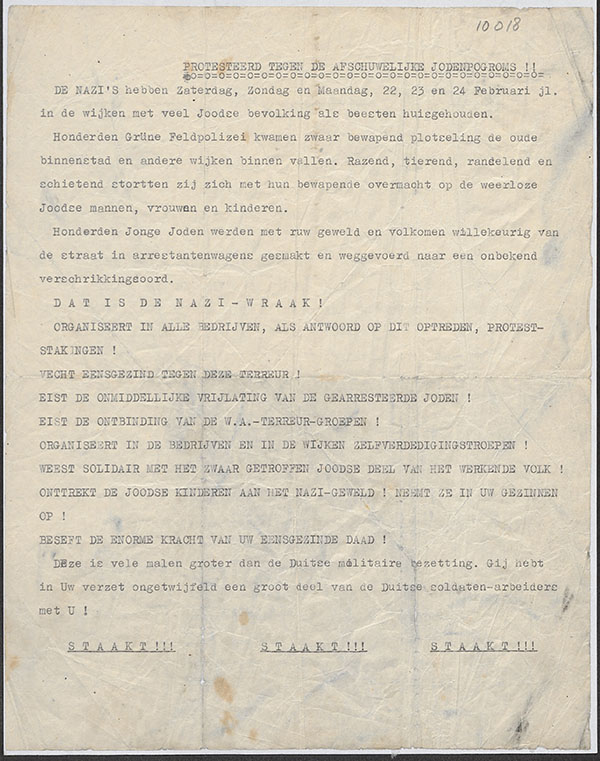
The CPN’s archival sources from the period 1940–1945, part of the IISH’s collection, have been digitised with funding from Metamorfoze and as part of a project by Netwerk Oorlogsbronnen, and are now available online. This also applies to the documents concerning fallen resistance fighters, which were collected after the war to compile a Memorial Book.
A good insight into the inner workings of the resistance of the CPN
The many personal documents provide a varied picture of the day-to-day reality of the resistance (hiding, raids, the underground press) in Amsterdam and beyond. This is what makes the archive special. All these documents offer an insight into how the fighters shaped the resistance, witnessed the actions undertaken, but also how they endured the sometimes fatal consequences.
For instance, CPN executive Jan Dieters writes to his wife the day before he is sentenced to death: “I have enough political sense to know that my life would hang by a thread every hour of the day if I were to fall into the hands of the Germans”.
Archival documents on well-known events
In addition, the archive contains significant documents on the February Strike, the 1944 Railway Strike and imprisonment in the camps at Schoorl, Amersfoort and St. Michielsgestel, as well as a large number of personal files of CPN resistance fighters.
Memorial Book
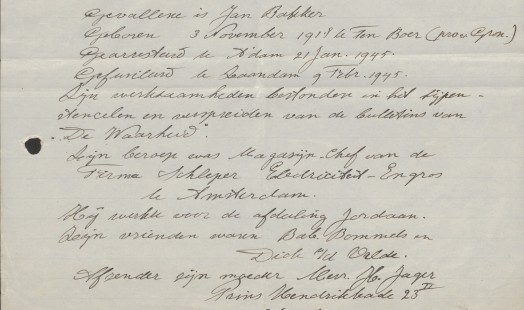
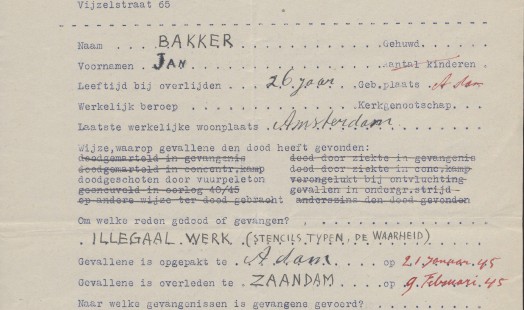
After the liberation, the idea arose within the CPN to produce a Memorial Book, in addition to the Roll of Honour of the Fallen compiled by the National Bureau for War Documentation, containing the names, photographs and details of the arrest and persecution of the communist resistance fighters who had perished. In De Waarheid – the CPN’s illegal resistance and party newspaper – calls were published asking people to send in this information. The Memorial Book was never published, but the letters, completed forms containing their details and photographs were carefully preserved and later stored in the CPN archive, which was housed at the IISG.
The resulting list of names and the accompanying documents relating to over 1,000 fallen resistance fighters have been reorganised and corrected as part of the digitisation project by Joop IJisberg, chairman of the Foundation for the Management of the CPN Archives. These documents can now also be viewed online. Such as those of Gerrit Willem Kastein and the brothers Gideon Willem and Jan Karel Boissevain.
The documents are now available online so that everyone can read the impressive letters and moving personal accounts. The sources are also included on the website and collection portal Oorlogsbronnen.nl of Netwerk Oorlogsbronnen. The names of fallen communist resistance fighters are included in Oorlogslevens.nl.
The database can be downloaded here: https://www.iisg.nl/archives/docs/cpn-gedenkboek-voor-IISG.xlsx.