Pepijn Brandon receives major ERC Synergy Grant for research into the role of the slave trade in the development of Europe
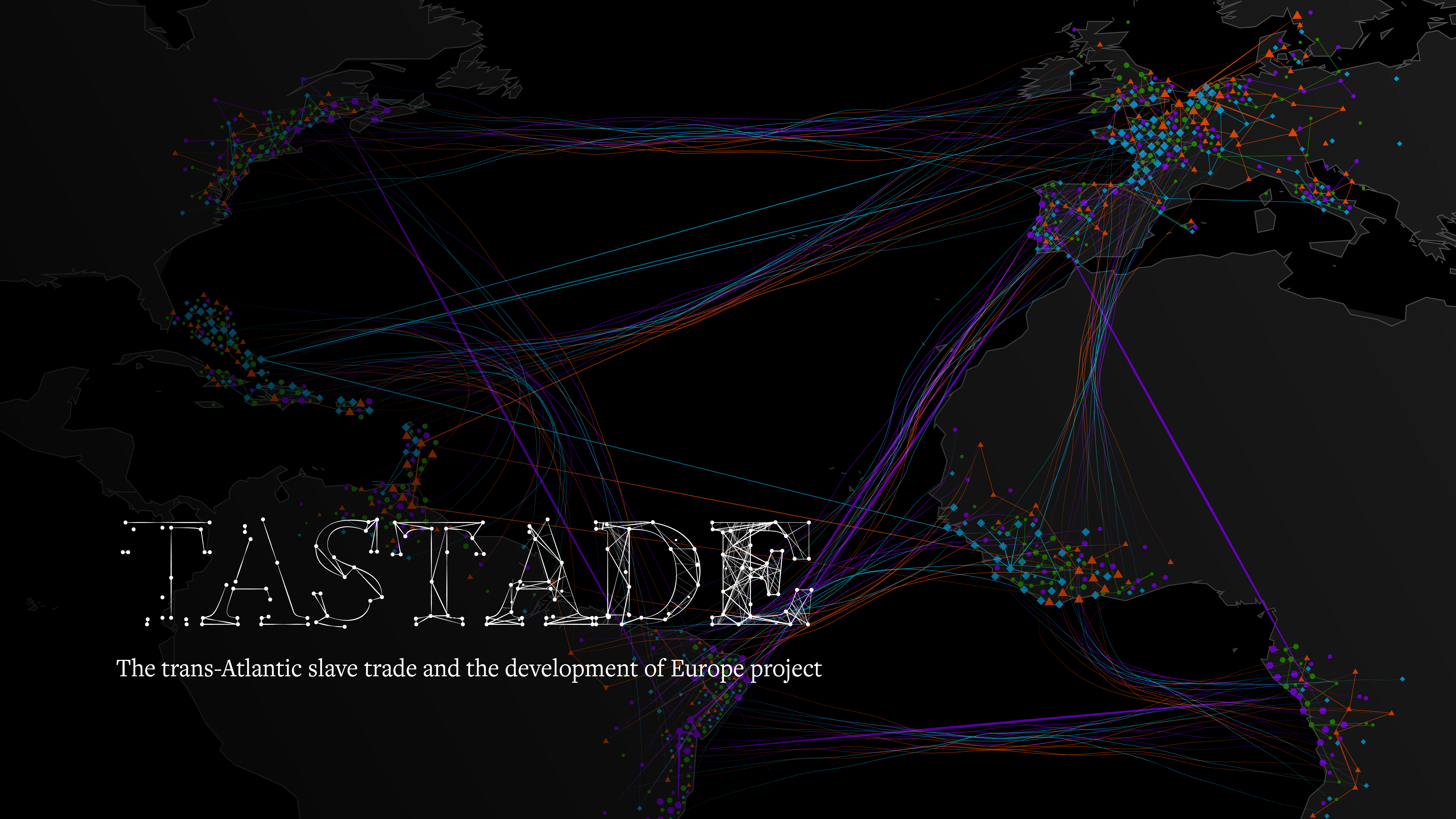
From the sixteenth to the nineteenth century, European slave traders forcibly and violently shipped more than 12.5 million men, women and children from the coast of West Africa to North and South America. Who invested in this slave trade, in Europe and beyond? How did they influence European economy, politics and culture? Historian Pepijn Brandon, together with three other researchers has received a Synergy Grant of 10 million euros from the European Research Council (ERC) to investigate these questions in the TASTADE project (The Trans-Atlantic Slave Trade and the Development of Europe).
In the past, the place of the slave trade in European history was often dismissed as marginal. By mapping tens of thousands of investors and their connections, the researchers hope to change this perception. ‘Most research has focused on how the slave trade shaped societies in West Africa and North and South America,’ says Pepijn Brandon. "For Europe, the emphasis has been on the companies and traders who organised the slave trade, and on their profits and losses. In this project, we are collecting all available information about the men and women throughout Europe and in the European colonies who invested in the slave trade, and about their connections within the state, trading communities, philanthropic institutions and the church. The availability of large amounts of data can fundamentally change our view of the impact of the slave trade on European societies."
Together with William Pettigrew (University of Lancaster), Silvia Marzagalli (Université Côte d'Azur, Nice) and Leonardo Marques (Universidade Federal Fluminense, Rio de Janeiro), Pepijn Brandon will lead the TASTADE project (The Trans-Atlantic Slave Trade and the Development of Europe). A large team of junior researchers, doctoral students, postdoctoral researchers and data specialists will collect, compare and analyse data on investors in the slave trade in this six-year project.
The four main researchers are all experts in the history of the slave trade but have different areas of specialization, covering various regions, time periods, types of historical sources, and approaches. This enables them to coordinate archival work in many languages and national contexts. A key innovation of their approach is that they focus not on the Dutch, English, French, Spanish, or Portuguese slave trades specifically, but rather on the transnational networks that connected investors across Europe.
The ERC Synergy
ERC Synergy grants fund collaborative projects that are too complex for one research group to carry out alone and aim to achieve breakthroughs that would not be possible in individual projects. Approximately 1.8 million euros of the total amount of 10 million euros will go to the International Institute of Social History (IISG), which will host the digital infrastructure, among other things.
About Pepijn Brandon
Prof. Dr. Pepijn Brandon is a senior researcher at the International Institute of Social History (IISG) and a professor of global economic and social history at Vrije Universiteit Amsterdam (VU Amsterdam). His previous research has included the importance of slavery for the Dutch economy in the eighteenth century, the involvement of the Amsterdam city council and the companies Hope & Co. and Mees & Zoonen in slavery, and large-scale land expropriation in Dutch colonial expansion.