To offer you the best service, this website uses functional cookies and cookies for gathering statistics and displaying videos. By clicking "accept" you give your consent.
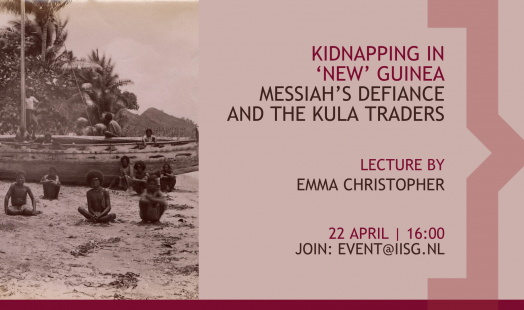
In the early 1880s, ships from Australia and Fiji (both parts of the British Empire), and German vessels from Sāmoa, competed in a deadly but lucrative trade kidnapping men, women, and children from the islands off New Guinea to work on sugar, cotton, and copra plantations.
Please join us in welcoming the second group of fellows of the Global Slavery Fellowship programme. They will be conducting research into the Dutch involvement in the transatlantic and Southeast Asian slave trade and slave labour.
The Humanities Cluster is excited to invite you to the kick-off event of the ERC project “Greenhouses as Vital Landscapes: Sustainability, Relationality, and the Future of Food” (VITALGREENHOUSE).
The European Social Science History Congress (ESSHC) aims to bring scholars within the field of Social Science History together so they can exchange ideas and build networks. The congress is held every other year, taking place at different cities in Europe each time.
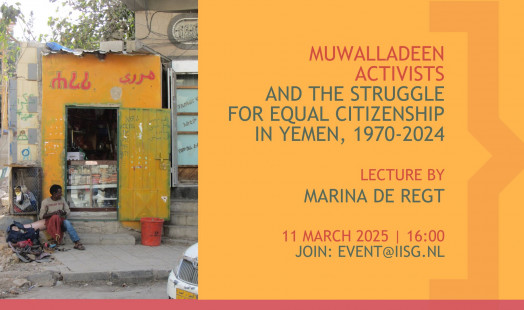
The Arab Spring and the subsequent transition process in Yemen provided an opportunity for minorities to fight for more civil rights. Youth and women were at the forefront of the protests, but also racial minorities increased their call for equal citizenship and against discrimination.
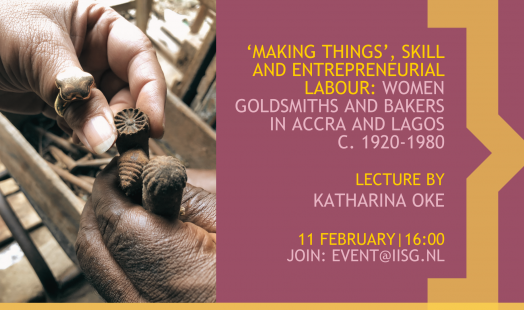
This lecture by Katharina Oke will give insight into a research project on the history of “Making Things” in West Africa (Ghana and Nigeria): focusing on artisans and craftspeople, this project turns to productive processes and entrepreneurial labour with a focus on the meaning of making, creating, and the socio-cultural importance of ‘making things’.
How can digital infrastructures for colonial archives support a better understanding of historical and contemporary issues? This symposium brings together researchers and practitioners to discuss the challenges and opportunities of working with digitized colonial records.
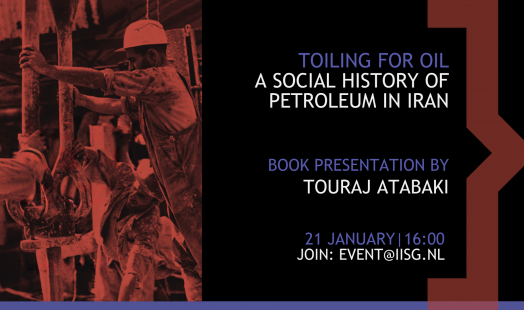
The social history of oil has been on the mind of Touraj Atabaki for 15 years. It has been the subject of several publications in relation to migration and labour. His new book Toiling for Oil presents an exploration of the social history of petroleum in Iran, while focusing on the experiences of the people working with the commodity.
Our seventh Palestine in Focus discusses archiving and archives, and more specifically, institutional practices and responsibility regarding Palestinian heritage.
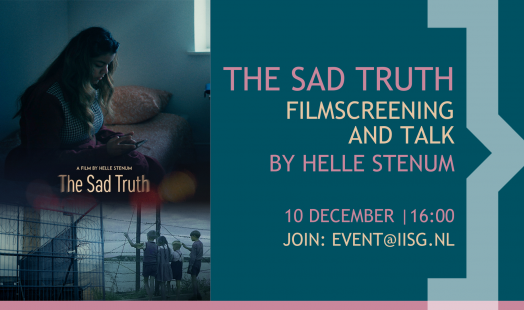
In the busy December month we always screen a film or documentary. This year: The Sad Truth by Helle Stenum, who will also give an introduction to her documentary.
A coalition of Amsterdam based Archives, Museums and Historical institutes has taken the initiative for fellowships for curators, archivists and historians in the field of slavery history. The first two fellows of the Global Slavery History Fellowships - Toluwanimi Owolana and Javier Estupiñán -will present the results of their research on 26 November at the IISH.
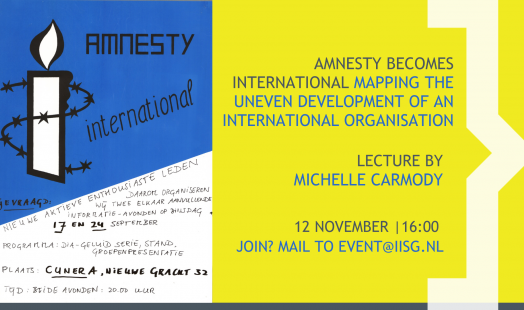
Amnesty International was created in London in 1961 as a campaign against political imprisonment. As the remit of the organisation grew, so too did its membership across the globe. By 1978 Amnesty counted over 200,000 members and supporters in 111 countries, with ‘national sections’ (formal Amnesty structures) in 35 of those countries. This expansion was, however, uneven, with significantly more interest generated in the global North than in the South.