To offer you the best service, this website uses functional cookies and cookies for gathering statistics and displaying videos. By clicking "accept" you give your consent.
The IRSH aims for a truly global scope and emphasises the need for a comparative perspective that recognises the interrelationship of historical change and the phenomena and factors underlying that change.
The IISH Foundation has an ANBI declaration, which guarantees that the tax authorities recognise the Foundation as an Institution for General Benefit (ANBI). As a result, donations to the Foundation can be deducted from income tax.
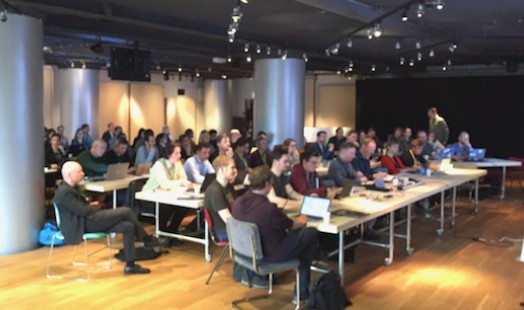
The International Iranian Economic Association (IIEA) is pleased to announce its fifth conference on Iran’s Economy to be held at International Institute of Social History, Amsterdam, Holland on March 8-9, 2018.
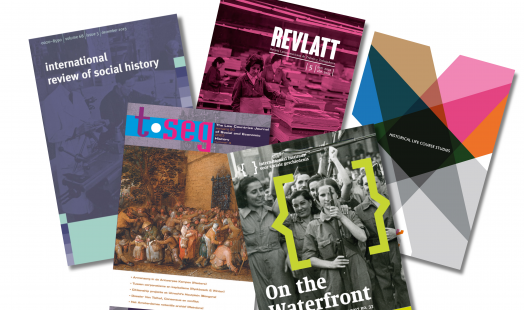
The International Review of Social History (IRSH) is one of the leading journals in the field of social history, in particular in the history of work, workers, and labour relations defined in the broadest possible sense.
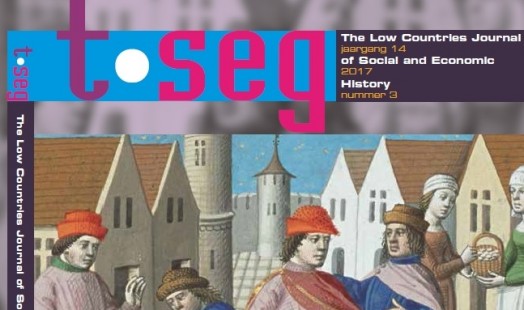
The TSEG journal is published four times a year and offers scholarly articles on a broad range of topics from the social and economic history of the Low Countries.
We greatly appreciate the enthusiasm, commitment and involvement of our Friends. The donations we receive from them are used to purchase or conserve special collections and to support research. Over the years, the Friends have become an indispensable network.
Research IISH finances. For Huub Sanders' research on the history of the IISH, Joppe Schaaper made an inventory of the institute's finances for the period 1935-1989.
Als uw schenking is vastgelegd in een periodieke overeenkomst/akte is het RSIN (voorheen fiscaal nummer) van de Stichting Internationaal Instituut voor Sociale Geschiedenis van belang.
The IISH is the largest institution in the world dedicated to social history research. Since 1935 the Institute has served as a site for rescuing and safeguarding the cultural heritage of labour movements and other emancipatory groups and movements.
Samuel Coronel. De gezondheidsleer toegepast op de fabrieksnijverheid. Een handboek voor industriëlen, genees- en staathuishoudkundigen. - 1861. IISH-call number: N 1631/10 (link is external)
Maintaining, preserving, and providing access to books, archives, and collections is costly – sometimes too costly for an individual to cover. More modest contributions are also very welcome! Up to € 150, you share in the costs.
There are several ways to adopt: in your own name or on behalf of a loved one, such as a friend or a family member. Adoption on behalf of a group, organization or company is possible as well. Alternatively, if you wish, you can adopt in someone's memory.
In well-informed circles, Max Nettlau was known as the 'Herodotus of Anarchy', the first and greatest historian of the anarchist movement. The name of the International Institute of Social History (1935) very nearly was the Max Nettlau Institute.
He was the son of Benjamin de Lieme, a kosher butcher, and Aaltje Goudsmit. On 30 March 1908 he married Rebecca Kahn, who bore him a daughter and a son. De Lieme learned about Jewish history, tradition and culture from his father, who was a Talmudic scholar.
She was the daughter of Jentje Johan Kleefstra, an educationalist and founder of the Brinio School in Hilversum, and Piternella Nanette Dekker. On 24 October 1907 she married the poet Carel Steven Adama van Scheltema. The couple did not have children.
He was the son of Nicolaas Wilhelmus Posthumus, a geography teacher and three-year HBS [secondary school] headmaster, and Huibertje IJzerman. On 20 July 1908 he married Dorothea Maria van Loon, with whom he had a daughter and a son. This marriage ended in divorce on 1 August 1928.
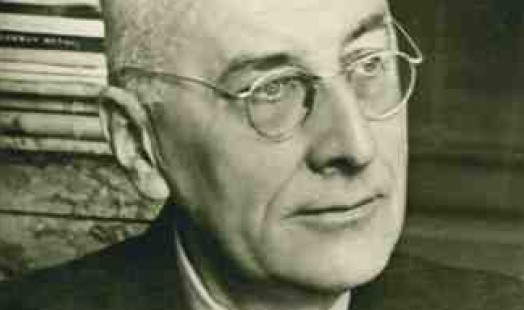
Although the IISH was officially founded on 25 November 1935, the history of the institute begins already in the decade before, in the person of Nicolaas Wilhelmus Posthumus (1880-1960).
In addition to the earliest collections, such as the Marx-Engels archive, the Max Nettlau collection, and the archives of the political and trade union branches of the international and national labour movement, the IISH now began to house a broader palette of social movements.